What is Intrusion Prevention System (IPS)? Complete Guide
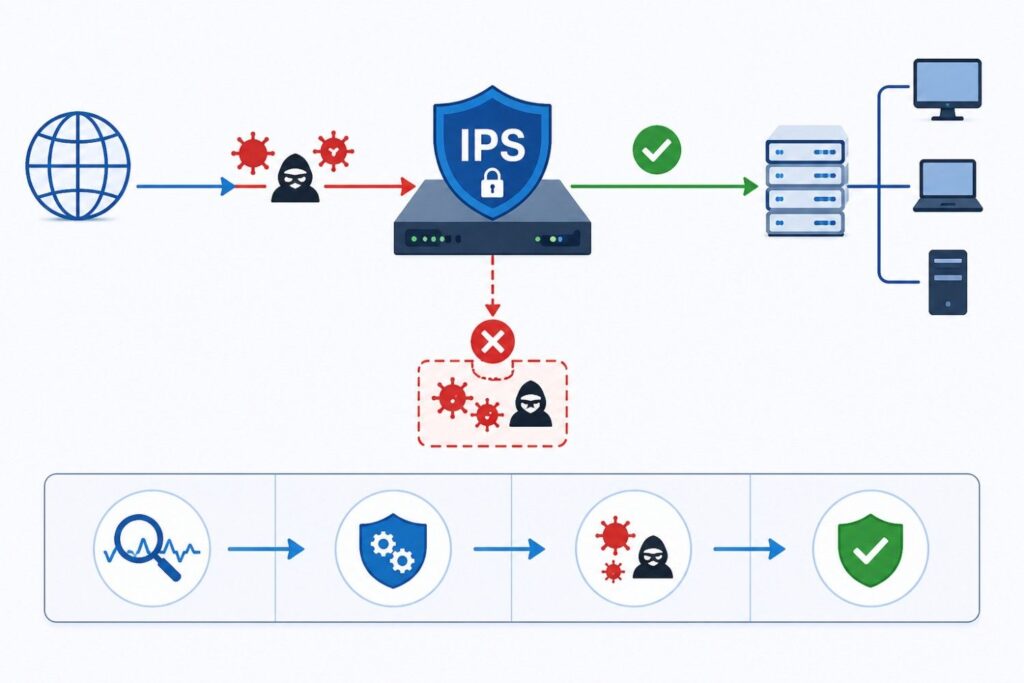
An Intrusion Prevention System (IPS) is a powerful cybersecurity solution that monitors network traffic and actively blocks threats in real time. It protects businesses from malware, unauthorized access, and cyberattacks before they cause damage.
At SOS Technology, we implement advanced cybersecurity and network security solutions to help businesses stay protected against evolving threats.
What is IPS in Networking?
In networking, an IPS is deployed inline within the network to inspect data packets and enforce security policies.
- Detect malicious activity
- Block suspicious traffic
- Enforce network security policies
Intrusion Prevention System Definition
An IPS is a proactive security system that identifies, analyzes, and blocks cyber threats before they impact business operations.
How Does an Intrusion Prevention System Work?
Working Process
- Traffic enters the network
- IPS scans incoming and outgoing packets
- Matches traffic against threat databases
- Detects anomalies or known attack signatures
- Blocks or allows traffic based on security rules
Detection Methods
- Signature-Based: Identifies known threats using predefined signatures
- Anomaly-Based: Detects unusual behavior or traffic patterns
- Policy-Based: Enforces predefined security policies
Types of Intrusion Prevention Systems
1. Network-Based IPS (NIPS)
- Monitors entire network traffic
- Stops attacks centrally
2. Host-Based IPS (HIPS)
- Installed on individual devices
- Protects endpoints and servers
3. Wireless IPS (WIPS)
- Secures Wi-Fi networks
- Detects rogue access points
4. Network Behavior Analysis (NBA)
- Detects abnormal traffic patterns
- Identifies potential attacks early
Network Intrusion Prevention System
A network IPS protects the entire IT infrastructure by continuously analyzing traffic and blocking threats instantly.
Host-Based Intrusion Prevention System
A host-based IPS monitors:
- File activity
- Applications
- System behavior
Wireless Intrusion Prevention System (WIPS)
- Detects unauthorized access points
- Blocks rogue wireless devices
- Protects Wi-Fi environments
Mobile Intrusion Prevention System
- Blocks malicious mobile applications
- Prevents phishing attacks
- Secures mobile data
Intrusion Prevention System in Cybersecurity
- Stops cyberattacks in real time
- Prevents data breaches
- Enhances overall network security
Examples of Intrusion Prevention Systems
- Network security appliances
- Endpoint protection software
- Cloud-based IPS solutions
Conclusion
An Intrusion Prevention System is a critical component of modern cybersecurity strategies. By combining detection and prevention capabilities, IPS provides real-time protection against evolving threats.
Implementing the right IPS solution ensures business continuity, data security, and regulatory compliance.
Protect Your Network with SOS Technology
Partner with SOS Technology to deploy advanced cybersecurity solutions including intrusion prevention systems, threat detection, and network protection.

- Enterprise cybersecurity solutions
- Intrusion detection and prevention systems
- Network security and monitoring
- 24/7 technical support
Contact us today to secure your business.